Testing an EEG headset with moving worlds
For an EEG headset manufacturer, we built a VR test environment to put their brain sensor through its paces. Researchers control moving visual patterns from a desktop app, while the person in VR reacts and the EEG records their brain activity.
- CLIENT
- An EEG headset manufacturer
- INDUSTRY
- Health technology
- WHAT WE BUILT
- VR test environment and desktop control app
- WHERE IT RUNS
- Meta Quest 2 and a desktop PC
- 3 pattern typesStripes, seesaw and grids
- Live controlSpeed, angle and rotation
- 3 movements trackedHead, hand and centre of balance
- One desktop appTo run every test
A brain sensor needs the brain to react
To prove an EEG sensor works, you need to trigger clear, repeatable brain responses and measure them.
Flat screens and printed patterns are weak triggers, and every test session tends to turn out slightly different.
The team needed a controllable environment that could provoke strong visual responses, exactly the same way every time.
A test bench for the brain, built in VR
We built a VR world of moving patterns, and a desktop app that gives researchers full control over it.
- 01
Worlds made of patterns
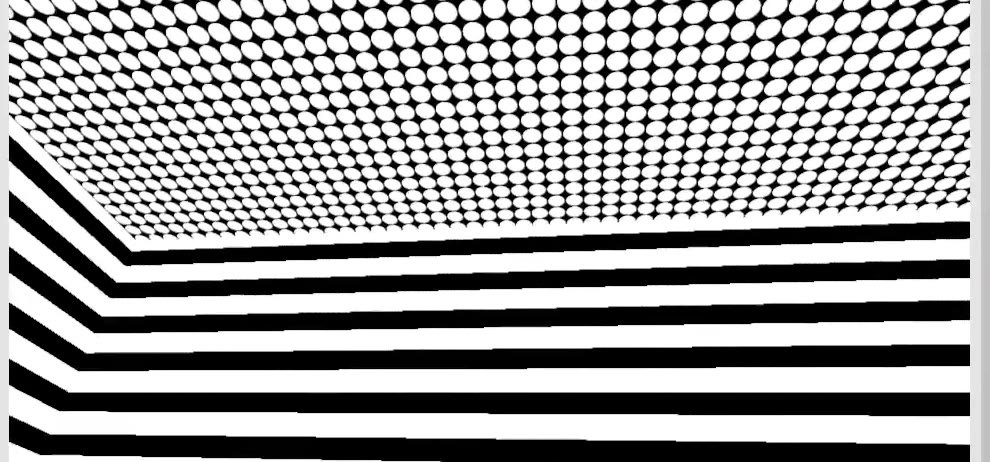
In VR, the person stands inside rooms of moving stripes, grids and dots that fill their whole view.
THE CHALLENGEPatterns must be strong enough to trigger a clear response, yet comfortable enough for repeated tests.HOW WE SOLVED ITWe built adjustable patterns so researchers can tune the intensity to each test. - 02
Full control from the desk
A desktop app lets researchers switch pattern type and change speed, angle and rotation while the test runs.
THE CHALLENGEChanging a VR scene live, without interrupting the session.HOW WE SOLVED ITWe connected the desktop app to the headset so every change appears instantly in VR. - 03
Movement, measured live
The app tracks how the head, hands and centre of balance move in response, and plots it as the test runs.
THE CHALLENGEMatching movement data to exactly what the person was seeing at that moment.HOW WE SOLVED ITWe recorded movement against the pattern timeline, so every reaction can be traced to its cause. - 04
Repeatable by design
Looping sequences and reset controls make it easy to run the same test again.
THE CHALLENGESensor tests are only useful if they can be repeated exactly.HOW WE SOLVED ITWe added rotation loops and one click resets, so each test starts from the same point.
A reliable way to test a brain sensor
The manufacturer uses the system to test how their EEG sensor picks up brain responses to controlled visual stimulation.
- Strong, repeatable triggers for sensor testing
- Researchers run every test from one desktop app
- Easy to extend with new patterns and tests
Inside the project


What it is built with
Building health tech or research hardware?
We build VR test environments and software around your device. Start with a 2 to 3 week Prototype Sprint, or book a call.