Haptiq: quantum computing, taught as a game
Haptiq is a VR adventure we built for a European government education programme. It turns one of the hardest topics in science into puzzles students want to solve, and they learn how quantum computers work along the way.
- CLIENT
- A European government education programme
- INDUSTRY
- Education and government
- WHAT WE BUILT
- Story driven VR learning game
- WHERE IT RUNS
- Meta Quest headsets in schools and universities
- 5 story journeysStudents choose their own path
- 3 quantum ideasSuperposition, entanglement and qubits, taught through play
- Used in classBy schools and universities
- No VR experience neededAnyone can start
The future of computing, and almost impossible to explain
Quantum computing will shape the next generation of jobs, but it is famously hard to teach. Diagrams of qubits and entanglement lose most students within minutes.
The programme wanted high school and university students to actually understand the basics, and to leave curious rather than confused.
They needed something students would want to try, and that teachers could run in a normal classroom.
Make students play their way to understanding
We built a story driven VR game where every puzzle teaches a real quantum idea.
- 01
Learning wrapped in a story
Students start in a launch area and choose one of five story journeys. In each, a friend is trapped in a strange quantum world, and only the student can free them.
THE CHALLENGEAccurate science is often dull, and fun stories are often inaccurate.HOW WE SOLVED ITWe worked through every puzzle until the science held up and the story still pulled students forward. - 02
Every puzzle teaches one idea
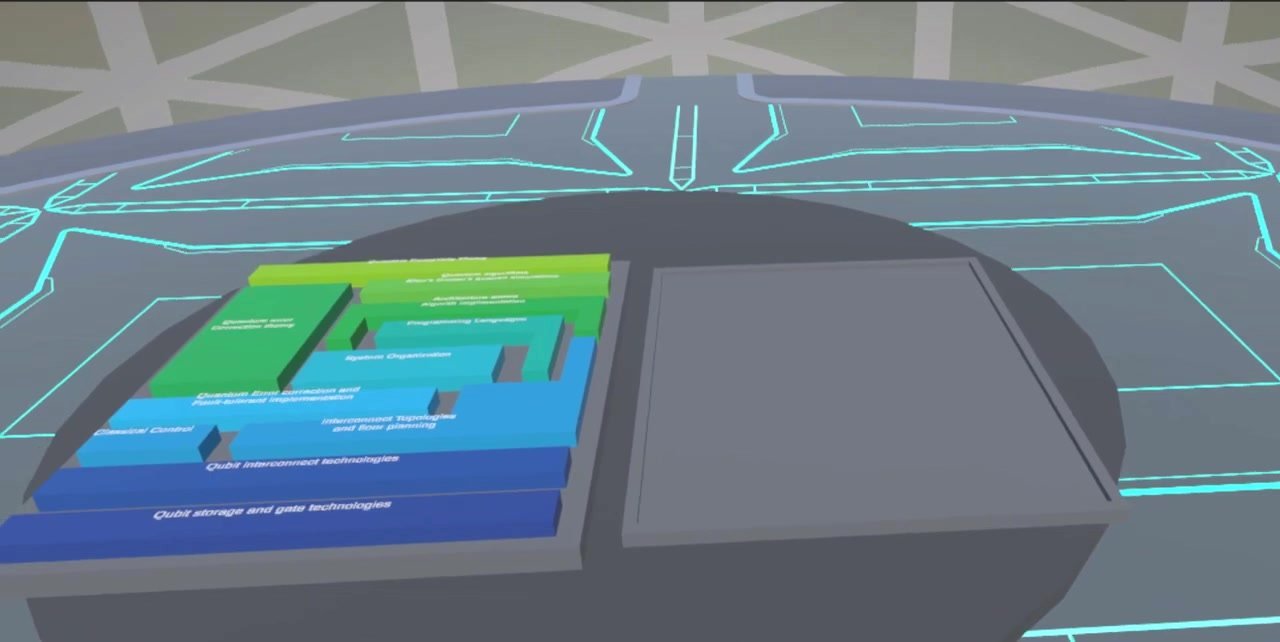
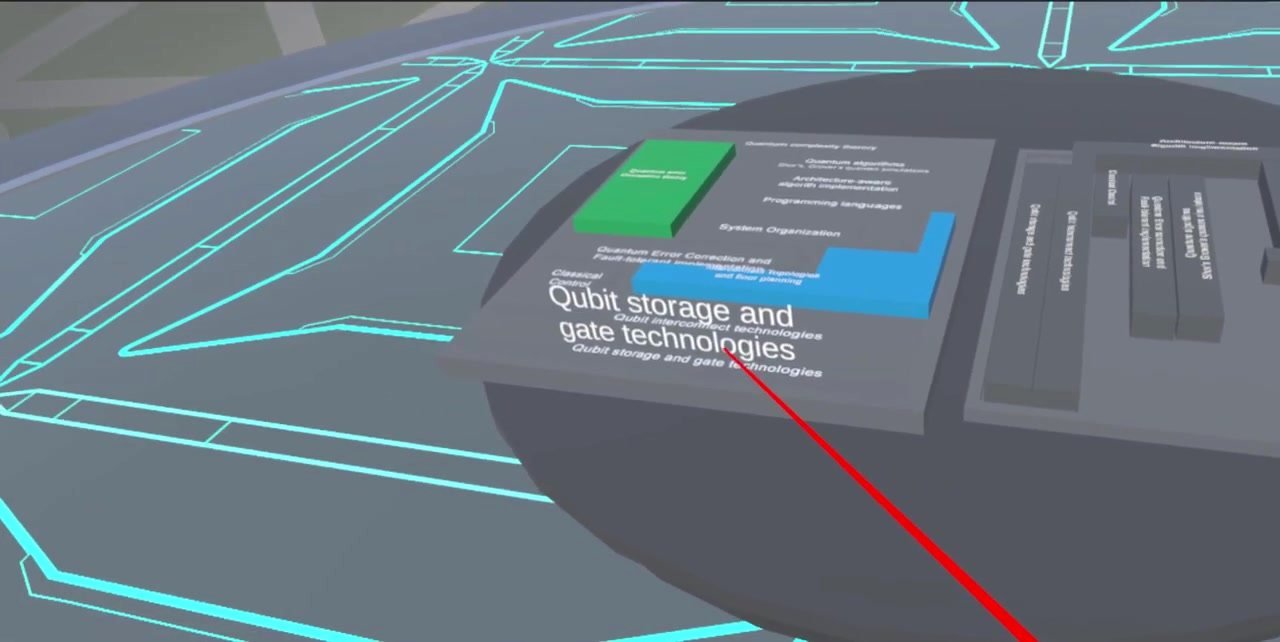
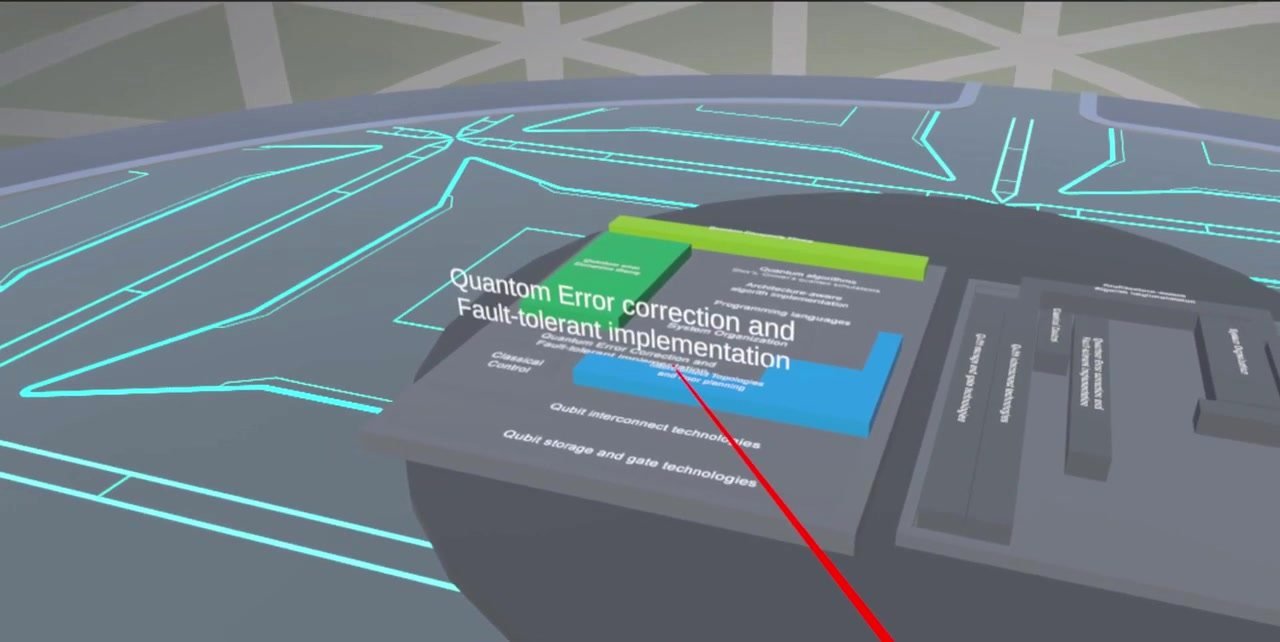
Each puzzle is built around a real concept such as superposition, entanglement or qubits. In one challenge, students assemble a quantum computer layer by layer, from qubit storage and error correction up to algorithms and programming languages.
THE CHALLENGEAbstract ideas have no shape you can grab or move.HOW WE SOLVED ITWe gave each concept a physical form in VR, so students can pick it up, combine it and see what happens. - 03
Easy for first time VR users
Natural controls let students grab and move things the way they would in real life.
THE CHALLENGEMost students had never worn a headset, and class time is short.HOW WE SOLVED ITWe kept controls to a few natural actions and tested them until new users could start without help. - 04
A world worth exploring
A futuristic world inspired by the mystery of quantum physics makes students want to look around and keep going.
THE CHALLENGERich visuals and smooth performance pull in opposite directions on a standalone headset.HOW WE SOLVED ITOur art team built detailed models and animation, then optimised every scene to run smoothly on Meta Quest.
Hard science that students want to try
The experience is used in schools and universities as part of the programme, giving students a first, memorable understanding of quantum computing.
- Students learn by doing, not by memorising
- Teachers get a ready made lesson that students look forward to
- The same approach works for any complex topic, from chemistry to engineering
Inside the project
What it is built with
Need to make a complex topic easy to learn?
We turn hard subjects into experiences people want to try. Start with a 2 to 3 week Prototype Sprint, or book a call.